Supplemental inspection practice
Interactive Truck Inspection Lab
Choose an inspection area, then touch the numbered markers. Zoom and move the photograph to study each component.
Touch a marker to inspect that component. Drag to move after zooming.
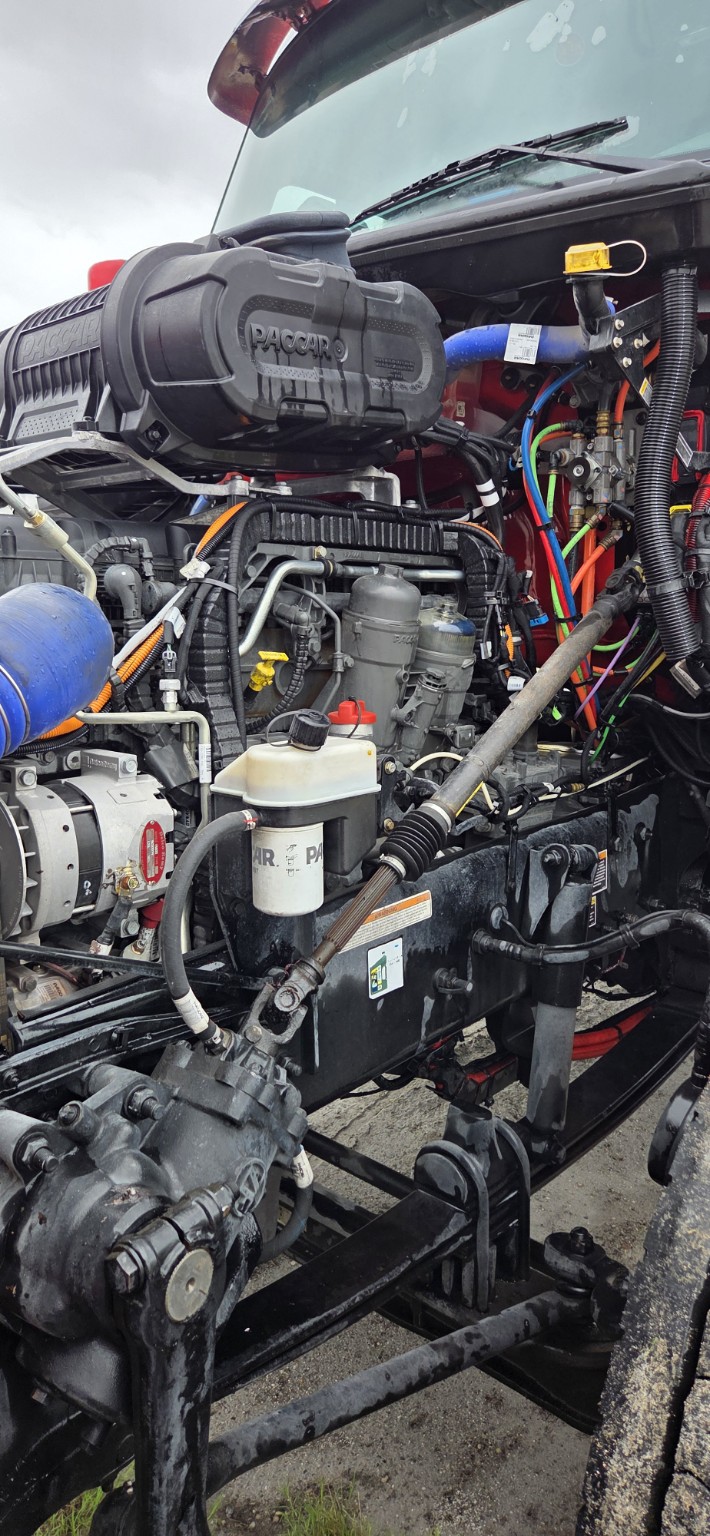
Image credits and methodology
Main vehicle photographs © Leonardo Corredor, used with permission. Employer, fleet, and plate identifiers have been removed from exterior photographs for privacy. Supplemental component photographs: Panoha, licensed CC BY-SA 3.0 through Wikimedia Commons. Component descriptions are general educational guidance and must be checked against the vehicle manufacturer, employer procedures, current regulations, and the applicable state CDL manual.
Component reference by inspection area
Read the same component guidance used by the lab without selecting markers. Follow the vehicle procedure, employer requirements and applicable state CDL manual.
Driver-side engine compartment
Engine oil dipstick
The dipstick is used to verify that the engine contains the correct amount of lubricating oil.
- Park level and follow the manufacturer’s procedure before checking.
- Confirm the oil level is within the acceptable marked range.
- Make sure the dipstick and tube are secure and show no evidence of leakage.
Defects requiring attention: A dangerously low level, oil contamination, active leakage, a damaged dipstick, or an unsecured tube must be reported and evaluated before operation.
Steering shaft
The steering shaft transfers the driver’s steering-wheel movement to the steering gearbox.
- Inspect the shaft and universal joints for visible damage or looseness.
- Check that connecting hardware is present and secure.
- Look for excessive play, binding, or contact with hoses, wiring, or other components.
Defects requiring attention: Loose joints, missing hardware, visible damage, binding, or excessive movement are critical steering concerns.
Steering gearbox
The steering gearbox converts steering-wheel movement into motion of the steering linkage.
- Verify that the gearbox is securely mounted to the frame.
- Look for missing, loose, or damaged mounting hardware.
- Check the housing, seals, and connected lines for damage or fluid leakage.
Defects requiring attention: A loose mounting, crack, damaged housing, missing fastener, or significant fluid leak requires immediate attention.
Hoses and lines
Hoses and lines carry coolant, air, oil, fuel, or other operating fluids between vehicle systems.
- Look for cuts, cracks, bulges, abrasion, heat damage, and wet areas.
- Confirm clamps, fittings, and routing supports are secure.
- Make sure no hose is rubbing against a sharp, hot, or moving component.
Defects requiring attention: Active leaks, swelling, exposed reinforcement, severe abrasion, loose fittings, or unsafe routing must be corrected.
Electrical wiring and looms
Protected wiring supplies power and carries signals to engine and vehicle systems.
- Inspect visible looms for chafing, melted insulation, exposed conductor, or loose connectors.
- Confirm routing clips and protective coverings are secure.
- Check that wiring is kept away from heat, sharp edges, and moving parts.
Defects requiring attention: Exposed wire, burned insulation, an unsecured harness, or a damaged connector can cause a fire, short circuit, or system failure.
Component mounting and frame area
Brackets and fasteners keep major systems correctly positioned under vibration and load.
- Look for cracked or bent brackets, missing fasteners, and shifted components.
- Inspect visible frame and mounting points for cracks, unauthorized welds, or fresh movement marks.
- Confirm attached lines are supported and not pulled tight.
Defects requiring attention: Cracked mounting, missing hardware, frame damage, or a component that can move independently requires qualified evaluation.
Front suspension components
The front suspension supports the tractor, maintains axle position, and helps keep the steer tires in contact with the road.
- Inspect visible springs, hangers, U-bolts, shocks, and connecting hardware.
- Look for cracks, breaks, shifting, looseness, or missing parts.
- Confirm no component is contacting the tire, frame, or another part improperly.
Defects requiring attention: A cracked or displaced spring, broken U-bolt, loose mounting, or damaged suspension member is a serious safety defect.
Steering axle, suspension, and brake
Front brake chamber
The brake chamber converts air pressure into mechanical force that applies the foundation brake.
- Confirm the chamber and clamp are securely mounted and not visibly damaged.
- Inspect attached air hoses and fittings for rubbing, cracking, and leakage.
- Listen for air leakage during the appropriate brake-system check.
Defects requiring attention: A loose chamber, damaged clamp, cracked housing, audible leak, or compromised hose requires service.
Brake air hose
The flexible air hose supplies controlled air pressure to the brake chamber as the wheel and suspension move.
- Inspect the entire visible length for cuts, cracks, abrasion, bulges, and heat damage.
- Confirm fittings and support points are secure.
- Make sure the hose has enough movement without rubbing or stretching.
Defects requiring attention: An air leak, exposed reinforcement, severe abrasion, kink, loose fitting, or unsafe routing must be corrected.
Steering knuckle and linkage connection
The knuckle supports the wheel end and allows the steer wheel to turn through the connected linkage.
- Look for cracks, bends, damage, and obvious looseness.
- Confirm nuts, retaining devices, and connected linkage are present and secure.
- Inspect for unusual wear or fresh movement marks.
Defects requiring attention: Cracks, looseness, missing retention hardware, or visible deformation are critical steering defects.
Steering linkage
The linkage transfers gearbox movement across the steering axle to control wheel direction.
- Follow each visible rod and joint from connection to connection.
- Check for bends, cracks, missing hardware, and damaged joint boots.
- Look for excessive looseness or contact with another component.
Defects requiring attention: A bent or cracked rod, loose joint, missing nut or cotter pin, or damaged connection requires immediate attention.
Leaf spring and mounting
The leaf spring supports vehicle weight and helps maintain the steering axle’s position.
- Inspect all visible leaves for cracks, breaks, separation, or shifting.
- Check hangers, shackles, and related mounting hardware.
- Look for shiny movement marks or a spring contacting the frame or tire.
Defects requiring attention: A broken, missing, displaced, or improperly contacting spring component must be reported.
Steer tire and sidewall
The steer tire carries the front load and provides directional control.
- Inspect the sidewall for cuts, bulges, exposed cord, separation, and embedded objects.
- Verify inflation with an accurate gauge when safe and practical.
- Check tread depth and wear pattern according to current requirements.
Defects requiring attention: Exposed cord, a bulge, separation, significant cut, flat condition, or unsafe tread requires correction before operation.
Passenger-side engine compartment
Coolant reservoir
The coolant reservoir provides a visible level reference and expansion space for the pressurized cooling system.
- Check the cold-fluid level using the manufacturer’s markings and procedure.
- Inspect the reservoir, cap area, hoses, and mounting for leakage or damage.
- Never remove a pressure cap while the system is hot.
Defects requiring attention: Low coolant, cracks, active leakage, damaged hoses, or an unsecured reservoir require attention.
Windshield-washer reservoir
Washer fluid helps the driver maintain a clear windshield when dirt or road spray reduces visibility.
- Confirm an adequate fluid level.
- Inspect the container, cap, hose, and mounting for damage or leakage.
- Use fluid appropriate for expected weather conditions.
Defects requiring attention: An empty, cracked, leaking, or unsecured reservoir can prevent effective windshield cleaning.
Air-intake housing and ducting
The intake system supplies filtered air to the engine while keeping debris and unmetered air out.
- Inspect housings and ducts for cracks, holes, looseness, or collapse.
- Check clamps, mounting straps, and flexible connections.
- Look for indicators or warnings showing a restricted filter, when equipped.
Defects requiring attention: Loose clamps, damaged ducting, unsecured housing, or severe restriction can cause poor operation or engine damage.
Charge-air piping and clamps
Charge-air piping carries compressed air between the turbocharger, charge-air cooler, and engine.
- Inspect pipes, boots, and clamps for secure mounting.
- Look for splits, oil spray patterns, abrasion, swelling, or loose connections.
- Confirm piping is not contacting sharp or moving parts.
Defects requiring attention: A split boot, loose clamp, damaged pipe, or significant leakage requires evaluation.
Drive belt and pulleys
The drive belt transfers engine power to accessories such as the alternator, water pump, or air-conditioning compressor, depending on configuration.
- With the engine off, inspect visible belt surfaces for cracks, fraying, glazing, missing material, and contamination.
- Check that the belt is seated correctly in the pulley grooves.
- Use the manufacturer’s method to evaluate tension and tensioner condition.
Defects requiring attention: Fraying, deep cracking, missing ribs, oil saturation, misalignment, or improper tension requires correction.
Hoses, wiring, and connections
These routed connections support cooling, electrical, air, fuel, and emissions-related systems.
- Trace visible routing and look for rubbing, cuts, heat damage, leakage, or loose connections.
- Confirm protective loom, clamps, and supports are present.
- Look for wet areas, residue, or fresh spray patterns that can reveal a leak.
Defects requiring attention: Leaks, exposed wiring, severe abrasion, loose connectors, or contact with hot or moving parts require attention.
Rear tractor frame and fifth wheel
Fifth-wheel top plate
The fifth-wheel plate supports the trailer’s upper coupler and allows the tractor and trailer to articulate during turns.
- Inspect the plate for cracks, breaks, distortion, or abnormal wear.
- Confirm the surface is lubricated according to the manufacturer’s requirements.
- When coupled, verify there is no visible gap between the fifth-wheel plate and the trailer apron.
Defects requiring attention: A cracked or distorted plate, damaged mounting, inadequate lubrication, or a gap under the trailer apron requires correction before travel.
Fifth-wheel throat and locking area
The throat guides the trailer kingpin into the locking mechanism that secures the tractor to the trailer.
- Inspect the throat and visible locking area for damage, debris, and excessive wear.
- After coupling, use the approved procedure to verify the jaws are locked around the kingpin shank.
- Confirm the release handle is seated and secured; keep hands out of the mechanism.
Defects requiring attention: A lock that is not fully engaged, a release handle that will not secure, cracks, damaged jaws, or excessive play makes the combination unsafe.
Fifth-wheel mounting and slider hardware
Mounting brackets and, when equipped, slider rails transfer trailer forces into the tractor frame.
- Check brackets, rails, welds, bolts, and pins for cracks, damage, looseness, or missing hardware.
- If equipped with a sliding fifth wheel, confirm the locking pins are fully engaged on both sides.
- Look for fresh movement marks or components shifted from their normal position.
Defects requiring attention: Missing or loose fasteners, cracked brackets or welds, damaged rails, or slider pins that are not fully engaged require immediate correction.
Frame rails and crossmembers
The rails and crossmembers form the tractor structure and support the coupling, suspension, and drivetrain.
- Inspect visible rails and crossmembers for cracks, bends, corrosion, or unauthorized repairs.
- Check mounting bolts, rivets, and brackets for looseness, damage, or missing pieces.
- Look for shiny movement marks or contact between components.
Defects requiring attention: A cracked or bent frame member, loose crossmember, missing fastener, or unauthorized structural repair requires qualified evaluation.
Driveshaft and universal joint
The driveshaft and universal joints transmit power from the transmission to the drive axles while allowing suspension movement.
- Inspect the shaft for cracks, bends, dents, twisting, or debris wrapped around it.
- Check universal joints and yokes for missing hardware, looseness, or damaged bearing caps.
- Confirm guards or support components are secure when the vehicle is equipped with them.
Defects requiring attention: A bent or cracked shaft, loose joint, missing fastener, damaged yoke, or displaced bearing cap can cause loss of drive or component separation.
Drive-axle and differential housing
The axle housing supports the drive wheels and contains the differential that distributes power to them.
- Inspect the housing, seams, and input area for cracks, damage, or lubricant leakage.
- Check visible mounting points and fasteners for looseness or movement.
- Look underneath for fresh drips or an active leak.
Defects requiring attention: A cracked housing, significant lubricant leak, loose mounting, or damaged driveline connection requires service before operation.
Rear air springs and suspension area
Air springs support the tractor’s rear weight and allow the suspension to maintain ride height.
- Inspect visible air springs for cuts, cracks, abrasion, bulges, or improper inflation.
- Check upper and lower mounts for damage, looseness, or displacement.
- Inspect nearby lines and suspension members for rubbing or contact.
Defects requiring attention: A leaking, cut, badly cracked, displaced, or deflated air spring—or damaged mounting—requires correction.
Drive suspension, air lines, and mounting
Drive-axle air spring
The air spring carries part of the tractor’s weight and helps maintain the designed ride height.
- Inspect the rubber bellows for cuts, cracks, abrasion, bulges, and dry rot.
- Confirm the spring is inflated, correctly positioned, and not rubbing another component.
- Check the upper and lower mounting areas for looseness or damage.
Defects requiring attention: A deflated, leaking, shifted, cut, or severely cracked air spring, or damaged mounting, must be repaired.
Suspension and brake air lines
Flexible air lines deliver pressure to suspension controls and brake-related components while the axle moves.
- Trace each visible line for cuts, cracks, kinks, abrasion, heat damage, and stretching.
- Confirm clamps and routing supports keep the lines away from tires and moving suspension parts.
- Listen for leakage during the appropriate air-system checks.
Defects requiring attention: An audible leak, exposed reinforcement, severe chafing, a kink, loose fitting, or unsafe routing requires correction.
Air fittings and valve connections
Fittings and valves route and control air pressure for the suspension and related systems.
- Inspect fittings, valve bodies, and connected lines for damage and leakage.
- Confirm mounting hardware and connections are secure.
- Look for cracked tubing, damaged threads, or fresh movement marks.
Defects requiring attention: A leaking, cracked, loose, or damaged valve or fitting can reduce system performance and requires service.
Rear electrical harness and connectors
The protected harness carries electrical power and signals to rear tractor systems.
- Inspect loom and insulation for rubbing, cuts, melted areas, or exposed wire.
- Check connectors for secure engagement, corrosion, or broken locks.
- Confirm clips and supports prevent contact with sharp or moving parts.
Defects requiring attention: Exposed conductors, damaged connectors, burned insulation, or an unsecured harness can cause shorts, warning faults, or fire.
Suspension mounting and shock area
Mounts and dampers locate the axle and control suspension movement under load.
- Inspect brackets, bushings, fasteners, and the visible damper area for cracks, bending, looseness, or leakage.
- Look for missing hardware or rubber pushed out of position.
- Check for unusual contact or fresh movement marks.
Defects requiring attention: A cracked mount, missing or loose fastener, displaced bushing, or leaking or damaged shock component requires evaluation.
Dual drive tires and clearance
Dual-tire tread and casing condition
Drive tires carry the rear tractor load and transmit acceleration and braking forces to the road.
- Inspect tread and visible casing for cuts, bulges, exposed cord, separation, missing tread, and embedded objects.
- Check tread depth and wear pattern according to current requirements.
- Verify inflation with an accurate gauge when safe and practical.
Defects requiring attention: Exposed cord, a bulge, separation, major cut, flat condition, missing tread, or unsafe tread depth requires correction.
Dual-tire matching and contact
The two tires in a dual assembly must carry the load together without rubbing or creating an unsafe height difference.
- Confirm the tires are compatible in size and neither tire is visibly overloaded or underinflated.
- Look for uneven wear or a height difference that causes one tire to carry more load.
- Verify the sidewalls are not touching each other or another component.
Defects requiring attention: Mismatched dimensions, contact between sidewalls, major pressure imbalance, or severe uneven wear can overload a tire and must be corrected.
Space between dual tires
Adequate space prevents the dual tires from rubbing and allows inspection for trapped debris.
- Look between the tires for rocks, metal, wood, or other trapped objects.
- Confirm the tires do not touch when loaded.
- Inspect the visible inner sidewalls for cuts, abrasion, bulges, and damage.
Defects requiring attention: A trapped object, sidewall contact, exposed cord, deep abrasion, bulge, or inadequate clearance requires correction.
Mudflap and mounting
Mudflaps reduce water, mud, and debris thrown toward vehicles behind the tractor.
- Confirm the flap and support are present and securely mounted.
- Inspect for tears, missing hardware, sharp edges, or contact with the tire.
- Verify the flap hangs in the proper position for the vehicle and jurisdiction.
Defects requiring attention: A missing, torn, loose, dragging, or tire-contacting mudflap—or damaged mounting—requires correction.
Front exterior, visibility, and lighting
Windshield, wipers, and washers
Clear glass and working wipers and washers allow the driver to see traffic, hazards, and signals in changing weather.
- Inspect the windshield for illegal obstruction, severe cracks, or damage in the driver’s viewing area.
- Confirm both wiper arms and blades are present, secure, and in serviceable condition.
- Operate the wipers and washer system during the in-cab check and confirm adequate cleaning.
Defects requiring attention: Obstructed visibility, severely damaged glass, missing or damaged blades, loose arms, or an inoperative wiper or washer system requires correction.
Mirrors and mounting
Properly adjusted mirrors provide the driver with essential views along both sides and behind the tractor.
- Inspect mirror glass for cracks, damage, and excessive dirt.
- Confirm housings, arms, brackets, and mounting hardware are secure.
- Adjust the mirrors from the driving position and verify they hold their position.
Defects requiring attention: Broken or missing glass, a loose mount, severely obstructed view, or a mirror that will not remain adjusted is unsafe.
Clearance and identification lights
Upper lamps communicate the vehicle’s width and commercial-vehicle profile to other road users.
- Confirm lenses are present, clean, correctly colored, and not cracked or broken.
- Operate the lights and verify every required lamp illuminates.
- Inspect visible mounting and wiring for looseness or damage.
Defects requiring attention: A missing, broken, incorrectly colored, loose, or inoperative required lamp must be corrected.
Headlights
Headlights illuminate the roadway and make the tractor visible from the front.
- Check low beams and high beams for operation on both sides.
- Inspect lenses and housings for cracks, moisture, severe clouding, or looseness.
- Confirm the lamps appear properly aimed and equally bright.
Defects requiring attention: An inoperative beam, broken or loose housing, severely damaged lens, or obvious aiming problem requires service.
Turn signals and four-way flashers
Turn signals and hazard flashers communicate intended movement and warn other road users.
- Operate left and right turn signals and the four-way flashers.
- Confirm front lamps flash at a normal rate and use the required color.
- Inspect lenses, housings, and visible mounting for damage or looseness.
Defects requiring attention: A lamp that is missing, broken, incorrectly colored, dim, or not flashing correctly requires correction.
Hood, grille, body, and bumper
Secure exterior panels and protective structures prevent parts from opening, separating, or interfering with safe operation.
- Inspect the hood, grille, fenders, and bumper for damage, looseness, or missing parts.
- Confirm hood latches are secured on both sides before travel.
- Look beneath the front for fresh fluid leaks, hanging components, or visible hazards.
Defects requiring attention: An unsecured hood, loose or projecting body part, damaged mounting, active leak, or component that could separate requires correction.
Driver-side tractor exterior
Driver-side mirror assembly
The mirror assembly provides the driver’s primary view along the tractor and toward the rear.
- Inspect glass, housing, support arms, and mounting hardware.
- Confirm the assembly is secure and the glass is clean and undamaged.
- Verify adjustment from the driving position and make sure vibration will not change it.
Defects requiring attention: Broken glass, a loose bracket, missing hardware, obstructed view, or an assembly that will not hold adjustment requires correction.
Door, hood, and body panels
Secure doors and body panels protect the driver and prevent components from opening or separating in motion.
- Inspect the door, hinges, latch, hood, fender, and visible panels for damage or looseness.
- Open and close the door to confirm it latches securely from inside and outside.
- Check the hood latches and make sure no panel has a sharp or projecting edge.
Defects requiring attention: A door or hood that will not latch, damaged hinge, loose panel, or hazardous projecting part requires correction.
Steps and handholds
Three-point contact depends on firm, clean steps and secure handholds when entering or exiting the cab.
- Inspect each step and handhold for cracks, looseness, missing hardware, and damage.
- Confirm step surfaces provide traction and are clear of oil, mud, ice, or debris.
- Use three points of contact and face the cab when climbing.
Defects requiring attention: A loose, broken, missing, slippery, or structurally damaged step or handhold must be corrected.
Fuel tank, cap, and mounting
The tank stores fuel while straps, brackets, and the cap keep it secure and contained.
- Inspect the tank for dents, cracks, wet areas, or active leakage.
- Confirm the cap is present, seals correctly, and is secured.
- Check tank straps, brackets, isolators, and fasteners for damage or looseness.
Defects requiring attention: Any fuel leak, unsecured or missing cap, cracked tank, broken strap, or loose mounting requires immediate attention.
Exhaust stack and heat shield
The exhaust system routes hot gases away from the cab while the shield reduces accidental contact with hot surfaces.
- Inspect the stack, shield, brackets, clamps, and visible joints for damage or looseness.
- Look for soot trails that may indicate leakage.
- Confirm the exhaust is not contacting hoses, wiring, body panels, or combustible material.
Defects requiring attention: A loose or leaking exhaust, damaged shield, broken support, or unsafe contact with another component requires service.
Steer tire, wheel, and hub
The steer wheel supports the front axle load and provides directional control.
- Inspect tread and sidewall for cuts, bulges, exposed cord, separation, and unsafe wear.
- Check the rim for cracks, bends, or unauthorized repairs and inspect all lug nuts for looseness or missing hardware.
- Look at the hub area for lubricant leakage and verify inflation and tread depth with appropriate tools.
Defects requiring attention: A flat or damaged tire, unsafe tread, cracked rim, missing or loose lug nut, or hub leak requires correction before operation.
Side marker and front signal lamps
Side markers and signal lamps communicate the tractor’s position, width, and intended movement.
- Operate the marker, turn-signal, and four-way flasher functions.
- Confirm lenses are clean, secure, correctly colored, and not broken.
- Inspect visible mounting and wiring for damage.
Defects requiring attention: A missing, broken, loose, incorrectly colored, or inoperative required lamp must be corrected.
Rear tractor exterior
Trailer air and electrical lines
Air lines operate the trailer brake system and the electrical cable powers trailer lighting and electrical functions.
- Inspect the full visible length for cuts, cracks, abrasion, kinks, exposed wire, and damaged connectors.
- Confirm the lines are supported, not tangled, and have enough clearance for turns without dragging.
- Check gladhands, seals, plugs, and storage points for damage and secure attachment.
Defects requiring attention: A leaking or damaged air line, exposed conductor, broken connector, missing seal, or routing that can drag, pinch, or pull apart requires correction.
Fifth wheel and mounting
The fifth wheel supports and secures the trailer while allowing articulation.
- Inspect the plate, throat, release mechanism, mounting brackets, rails, bolts, and welds for damage or missing parts.
- Confirm the surface is properly lubricated and the release handle is secure.
- When coupled, verify the locking jaws, kingpin engagement, and absence of a gap using the approved procedure.
Defects requiring attention: Cracks, damaged mounting, missing hardware, an unsecured release handle, incomplete locking, or a gap beneath the trailer apron makes the combination unsafe.
Frame rails and rear crossmember
The rails and crossmembers form the tractor’s load-carrying structure and support the coupling and rear equipment.
- Inspect visible rails, crossmembers, brackets, welds, bolts, and rivets for cracks, bends, corrosion, or looseness.
- Look for missing fasteners, unauthorized repairs, and fresh movement marks.
- Confirm no attached component is hanging or contacting a tire or driveline part.
Defects requiring attention: A cracked or bent structural member, loose crossmember, missing fastener, or unauthorized structural repair requires qualified evaluation.
Rear tractor lights
Rear lamps communicate braking, turning, hazard operation, and vehicle position to traffic behind the tractor.
- Operate tail, brake, turn-signal, and four-way flasher functions.
- Confirm each required lamp illuminates with the proper color and brightness.
- Inspect lenses, housings, visible wiring, and mounting for damage or looseness.
Defects requiring attention: A missing, broken, dim, incorrectly colored, loose, or inoperative required rear lamp must be corrected.
Reflectors and reflective tape
Reflective material outlines the tractor and improves recognition when viewed in low light.
- Inspect required reflectors and tape for presence, correct color, cleanliness, and secure attachment.
- Look for large missing sections, peeling, damage, or material hidden by dirt or equipment.
- Confirm the rear marking pattern remains visible and unobstructed.
Defects requiring attention: Missing, damaged, obscured, incorrectly colored, or substantially deteriorated required reflective material must be corrected.
Rear mudflaps and supports
Mudflaps reduce water, mud, and debris thrown toward vehicles behind the tractor.
- Confirm both flaps and support bars are present and secure.
- Inspect for tears, missing hardware, bending, sharp edges, or contact with the tires.
- Verify each flap hangs in the proper position for the vehicle and jurisdiction.
Defects requiring attention: A missing, torn, loose, dragging, or tire-contacting flap, or a damaged support, requires correction.
Drive tires, wheels, and fenders
The drive-wheel assemblies carry the rear tractor load and transfer acceleration and braking forces.
- Inspect tread, sidewalls, and dual spacing for cuts, bulges, exposed cord, separation, trapped objects, and unsafe wear.
- Check rims and lug nuts for cracks, damage, looseness, or missing hardware; look for hub-seal leakage.
- Confirm the fenders and their mounts are secure and do not contact the tires.
Defects requiring attention: A flat or damaged tire, unsafe tread, dual contact, cracked rim, loose or missing lug nut, hub leak, or loose fender requires correction.